Why Thermal Performance Matters in Real Buildings
In tropical climates, roof systems play a critical role in determining indoor comfort, energy consumption, and perceived building quality. While thermal performance is often discussed using laboratory values such as thermal resistance (R-value), these metrics are not always intuitive for developers, homeowners, or non-technical stakeholders.
To bridge this gap, Stact conducted a real-site thermal performance test on an actual construction project to observe how different roof systems behave under real sunlight and real operating conditions.
Test Overview: From Lab Theory to Real-Life Performance
The objective of this study was simple:
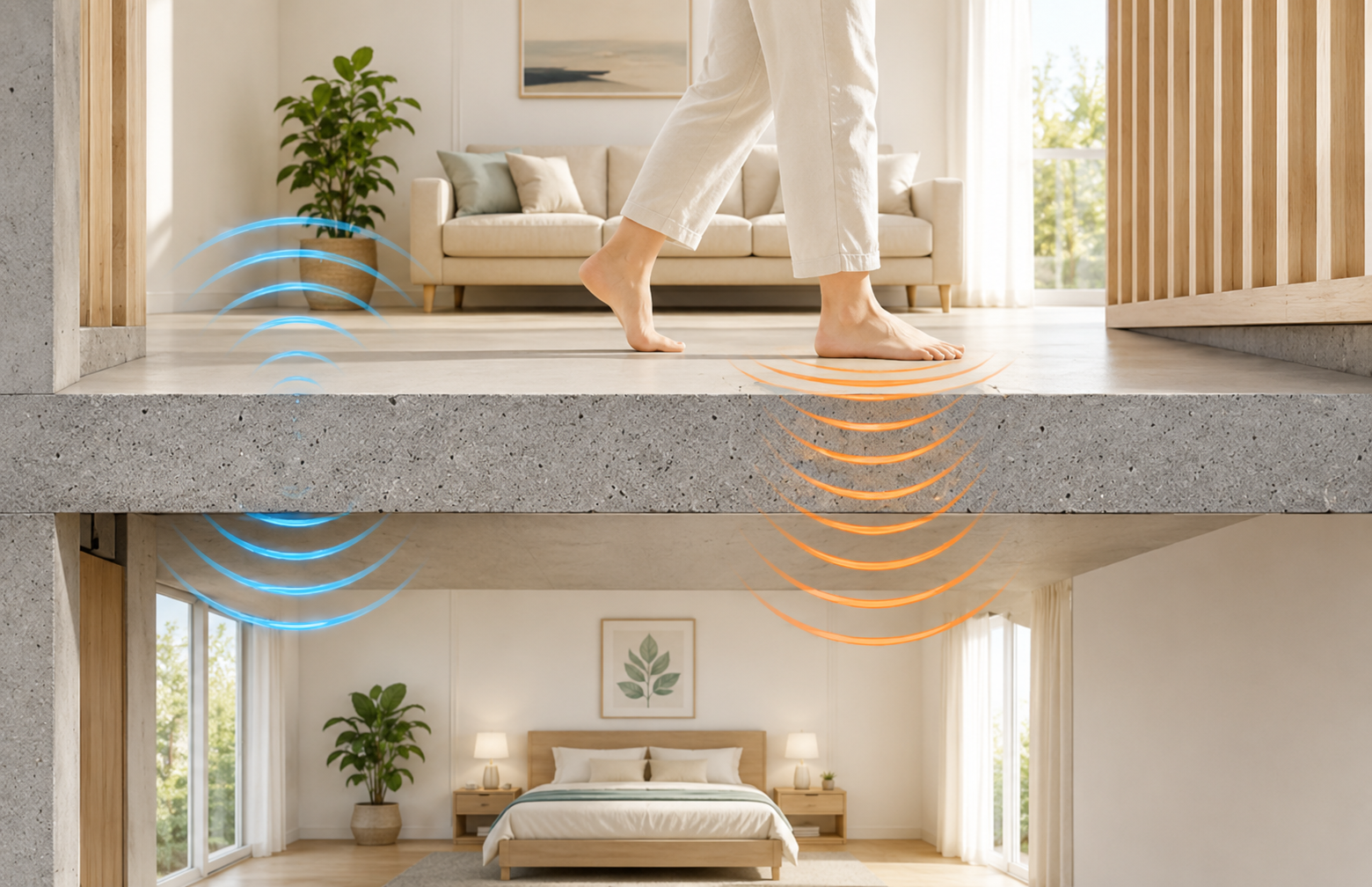
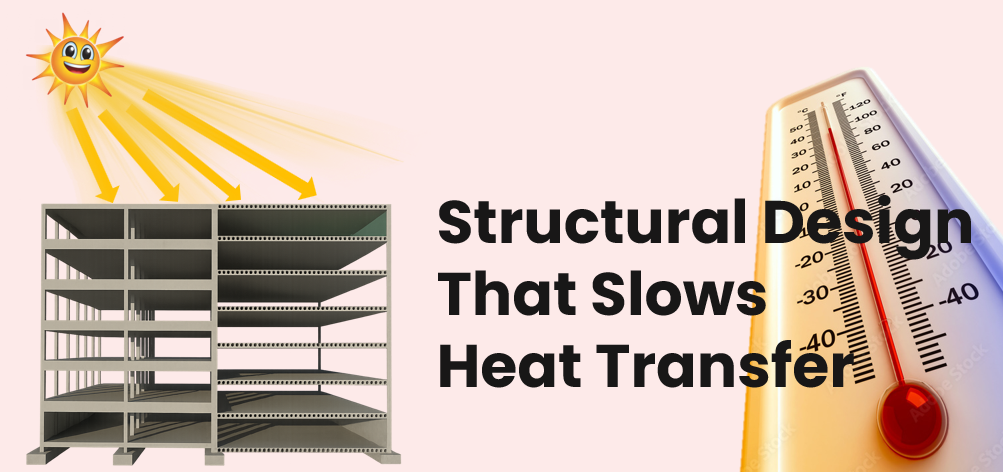
To understand how fast heat from the sun transfers through different roof systems into interior spaces.
Test Conditions
• Location: Active construction project in Bangkok
• Weather: Clear sky, full sunny day
• Measurement period: 07:30 – 16:30
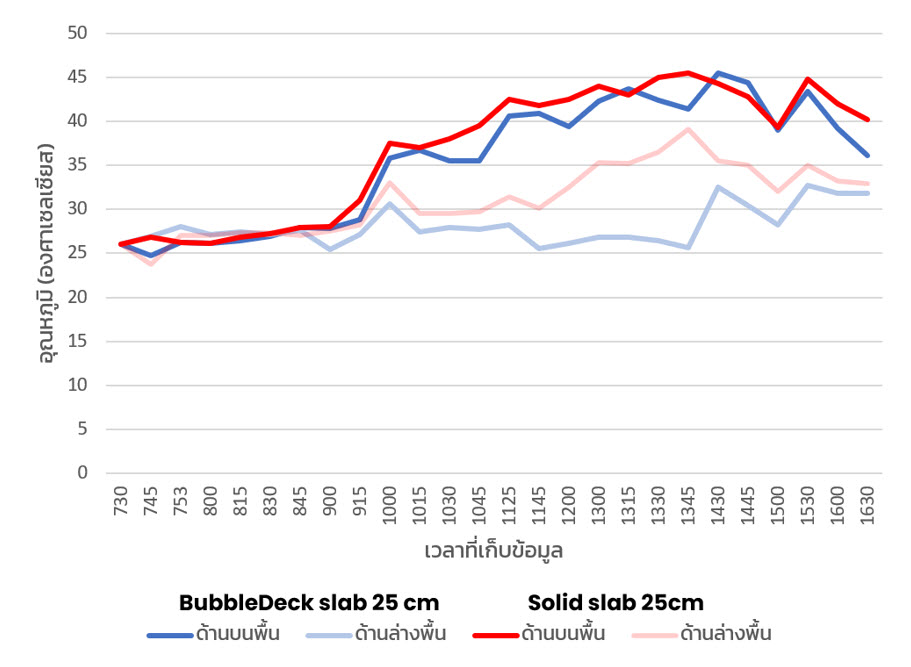
• Method: Surface temperature measurement above and below roof slabs
Roof Systems Compared
1) 25 cm BubbleDeck slab
2) 25 cm solid concrete slab
3) 10 cm solid concrete slab
4) Metal sheet roof
All measurements were taken at consistent time intervals to ensure comparability.
Key Findings from Real-Site Measurements
1. Heat Transfer Speed Differs Significantly by Roof Type
The data clearly shows that not all roof systems respond to solar heat in the same way:
• Metal sheet roof heats up the fastest and reaches the highest surface temperatures, allowing heat to transfer indoors almost immediately.
• 10 cm solid slab provides some reduction in heat transfer but still allows heat to pass through relatively quickly.
• 25 cm solid slab delays heat transfer due to increased mass, but also stores heat that is later released into the interior.
• 25 cm BubbleDeck slab demonstrates the slowest heat transfer into the space below, despite having the same overall thickness as the solid slab.
2. Lower and Delayed Peak Indoor Temperature
One of the most important observations is the time-delay effect:
• Spaces below the BubbleDeck slab experience a slower temperature rise during the day.
• Peak indoor temperatures occur later and remain lower compared to solid slabs and metal sheet roofs.
This shift is particularly valuable in tropical climates, where peak cooling demand typically occurs in the early to mid-afternoon.
3. Improved Thermal Stability Inside the Building
Beyond peak temperatures, BubbleDeck also provides:
• Smaller temperature fluctuations below the slab
• More stable indoor thermal conditions throughout the day
This translates into improved thermal comfort and reduced reliance on mechanical cooling systems.
Comparative Performance Summary
| Roof System | Heat Transfer Speed | Indoor Comfort Outcome |
| Metal sheet roof | Very fast | Very hot, unstable |
| 10 cm solid slab | Fast | Still heats quickly |
| 25 cm solid slab | Moderate | Better, but stores heat |
| 25 cm BubbleDeck slab | Slowest | Cooler and more stable |
How BubbleDeck Achieves Better Thermal Behavior
While BubbleDeck is not marketed as a traditional insulation system, its voided slab configuration plays a crucial role in thermal performance:
• Reduced concrete volume lowers thermal conductivity paths
• Air voids act as thermal buffers, slowing heat flow
• Heat transfer is delayed rather than transmitted directly
This behavior aligns with laboratory findings showing 17–39% better thermal resistance compared to solid slabs of similar thickness, while the real-site test confirms that these advantages translate into measurable comfort improvements in actual buildings.
Practical Implications for Developers and Owners
From a development and operational perspective, improved roof thermal performance means:
• Reduced peak cooling loads
• Potential downsizing of air-conditioning systems
• Lower energy consumption during peak hours
• Improved occupant comfort without adding insulation layers
Importantly, these benefits are achieved through structural efficiency, not additional materials.
Conclusion: Performance You Can Measure and Feel
Laboratory tests explain why BubbleDeck performs better.
Real-site measurements prove how that performance feels in real buildings. By slowing heat transfer, reducing peak indoor temperatures, and stabilizing thermal conditions, BubbleDeck roof slabs provide a clear advantage over conventional solid slabs and metal sheet roofs—especially in hot climates.
This study reflects Stact’s commitment to validating engineering performance not only through calculations and standards, but also through real-world testing that matters to building users and developers alike.